The Best Things to Do in Istanbul
Historical Places to See In Istanbul
When it comes to Istanbul, the most popular area that comes to mind is the Sultanahmet area. Many iconic historical sites from the Roman, Byzantine and Ottoman empires are in this area. The historical area, which is a real hippodrome where horse races took place during the Byzantine period, is now known as the Horse Square in Sultanahmet Square.
Historical Places at Sultanahmet Square
Hagia Sophia, Blue Mosque, Obelisk, the Serpentine Column and the German Fountain over which Egyptian hieroglyphics are located in this area. Ibrahim Pasha Palace, which you can visit today as a Museum of Turkish and Islamic Arts, is also at this square.
If you are planning to see these Ottoman and Byzantine Historical Sites, you can book an Istanbul Old City Tour. Or you can visit these places by yourself. If you are thinking of visiting them by yourself, we recommend that you stay at the Seven Hills Boutique Hotel located in the heart of Sultanahmet Square and visit these historical places just a few steps away. You can also sip your coffee with a magnificent view at the Seven Hills Restaurant, which has a magnificent view of Hagia Sophia and Blue Moque.
Hagia Sophia
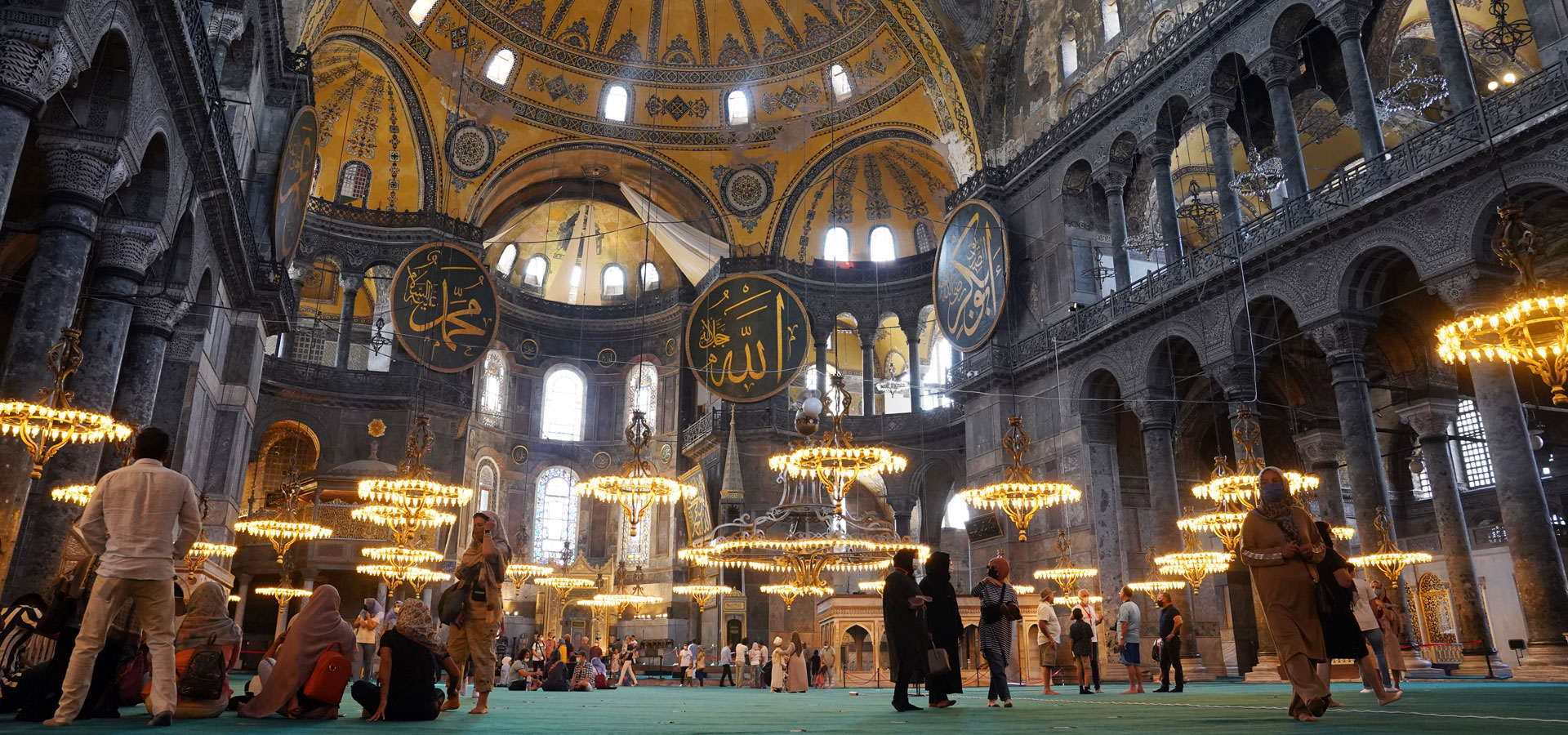
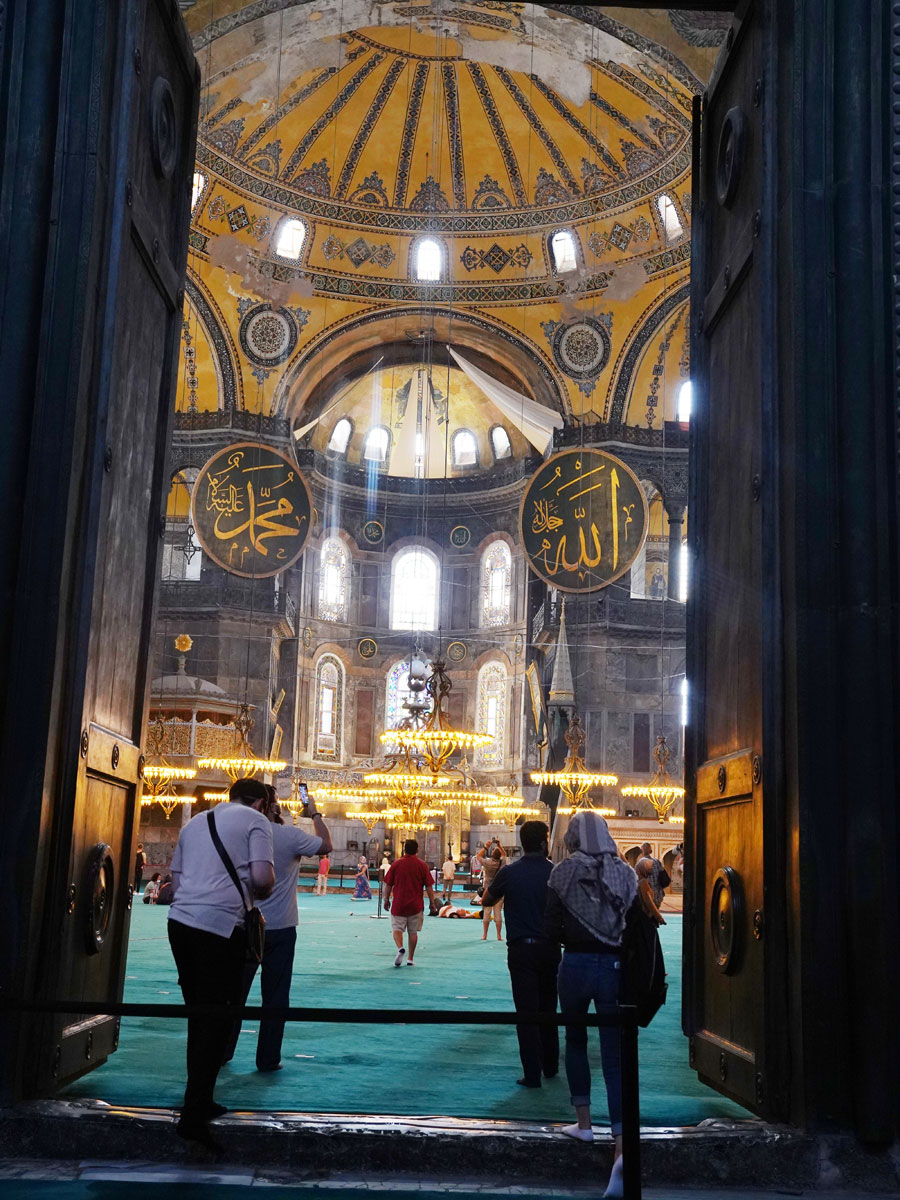
Hagia Sophia in Istanbul, which is based to the Byzantine Constantin days. After the conquest of Istanbul, the place where the first Friday prayer was performed was Ayasofya. It was converted into a mosque but is now visited as a museum.
When Fatih Sultan Mehmed conquered Istanbul, he was lucky to be one of the favorite of the whole world with his splendor of Hagia Sophia which he deemed worthy to make the first Friday prayer. Completed in 537 and commissioned by the Emperor Justinian, Ayasofya was used as a church in Byzantine for 916 years.
Structure within Hz. Figures such as Jesus, Virgin Mary, Constantine, Great Angels and Gabriel are decorated with gold, silver and marble mosaics.
After the conquest of Constantinople by Fatih Sultan Mehmed was converted into a mosque and the first minaret was added during the period of Fatih. Later, there were minarets added during the 2nd Bayezid period.
During the Ottoman period, the minbar, mihrab and sermon chairs were added to the Hagia Sophia and became a mosque.
Today, there are many pahitaht members and sultan's tombs in the garden of the Hagia Sophia Museum which serves as a museum. With its doors, gravestones and structures added during the Ottoman period, Hagia Sophia still preserves its former glory.
One of the top landmark in Istanbul, you should see is the Hagia Sophia Museum.
Blue Mosque (Sultanahmet Mosque)
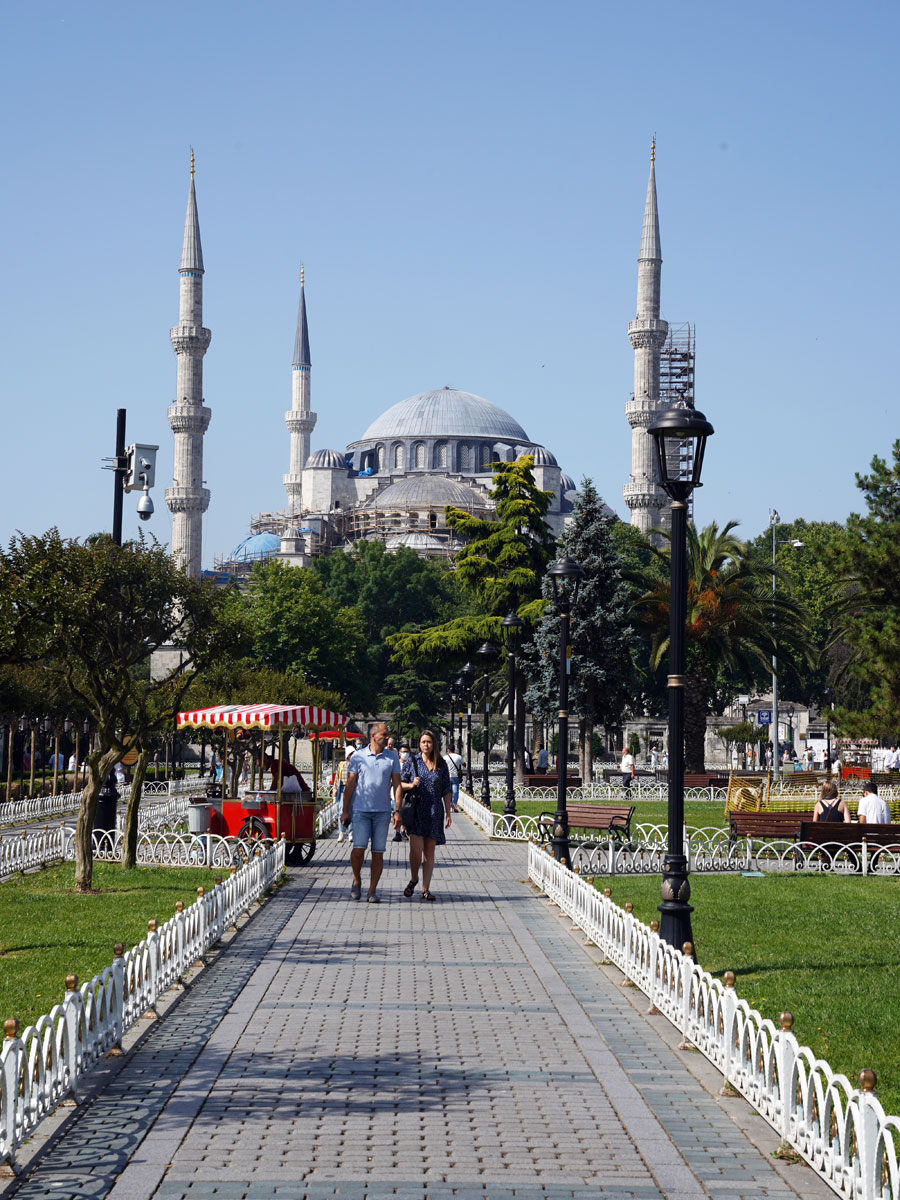
Because the mosque is decorated with blue, green and white colored Iznik tiles, and because its half domes and large dome are decorated with blue weighted pencils, the Europeans are called the Blue Mosque.
One of the most important works of the 17th century, the Blue Mosque is a masterpiece built by Mimar Sinan in his understanding of architecture by Sedefkar Mehmet Aga, the principal architect of the period, on the orders of Sultan I.Ahmet. The construction of the mosque, which lasted 7.5 years, started in 1609 and was completed in 1617.
Sultanahmet Mosque is the first and only 6 minarets of mosques in the Ottoman borders. The focus of the criticism on the building was the same amount of minaret as the Mecca Mosque and the high amount of money spent despite the decrease in the income of the empire.
When it was first built, it had a large complex. However, a large part of the complex consisting of structures such as madrasah, monk town, imarethane, arasta and hamam failed to reach today. Nevertheless, you can see the single domed grave and sundial of I. Ahmet, who died in the garden at the age of 28. The fountain in the mosque is designed with 6 columns.
The entrance to the courtyard of the Blue Mosque, which can be accessed through 3 doors, is made of iron. This cord was placed in the entrance and it was asked to give the message that Even though the sultan came to the house of God, he had to bow down pad.
The mystery of Blue Mosque
Blue Mosque is that there are no spiders and insects. The ostrich eggs, which the spider and insects do not like the smell of are used in the mortar of the mosque.
In the fountains located in the Blue Mosque, the water from the taps and how the rain water was evacuated could not be solved.
Basilica Cistern
Basilica Cistern, which is a popular destination for local and foreign tourists and visited by millions of people during the year, continues to fascinate its visitors with its close history of 1500 years.
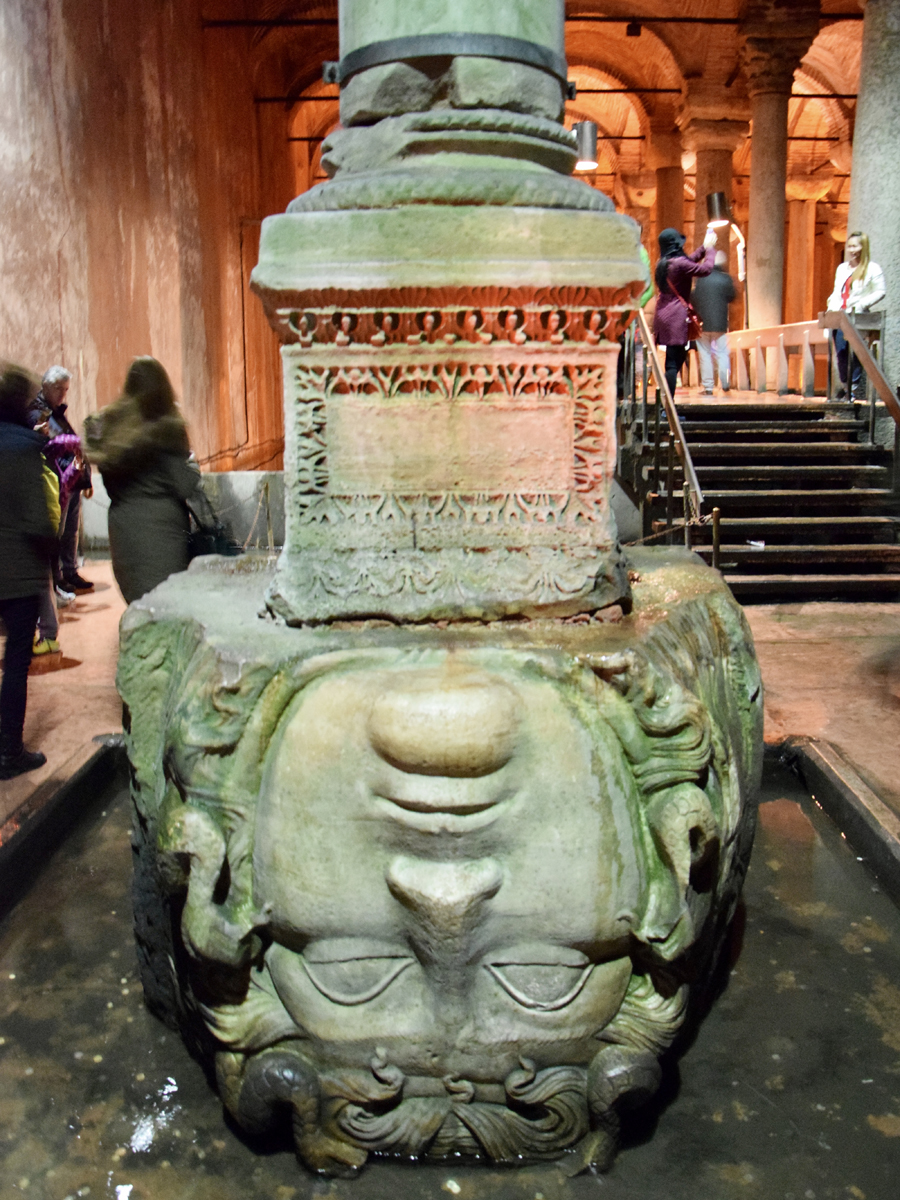
The cistern, built to meet the water needs of the palace in the Byzantine period, still impresses with its eye-catching columns and the Medusa statue.
To day concerts held in the Basilica Cistern, which also hosts many art events today, open the doors of a magical world to the participants.
The cistern, built in 532, is the largest covered cistern in the city of Istanbul. The use of old pillars, especially in the construction, is still helping to maintain its ostentatious appearance. The special mortar plaster used for waterproofing is one of the most important features of the cistern. The cistern, where 7000 thousand slaves were operated during construction, was completed in 38 years. The tears on the pillars indicate a slave who died during the construction of the cistern. The fish, which is located in the cistern which is still enchanting its visitors with its perfect atmosphere and special historical texture, nowadays fish.
Legend of the Underground: Medusa
Medusa Head, one of the masterpieces of the Roman period, was taken from the structures and brought to the Basilica Cistern. According to one legend, Medusa is one of the three Gorgonas in Greek Mythology, the female monster of the underworld, and Medusa, the snake-head, has the power to turn the ministers to stone. According to the widespread belief of the period, Gorgon landscapes are used to protect large buildings and special places. This is why the Medusa head is brought to the Basilica Cistern. According to another rumor, Meduasa, a girl who boasts her black eyes, long hair and beautiful body, loves Perseus, the son of Zeus. Meanwhile, Athena, who loves Perseus, is also jealous of Medusa and therefore turns Medusa's hair to snake. Medusa, a snake-headed snake, who no longer boasted of its beauty, becomes a power charm in Byzantine as a gravure in sword holders or as a statue in columns. But, as in the Basilica Cistern, the ministers are portrayed as reverse to prevent the stone from being cut.
Topkapi Palace
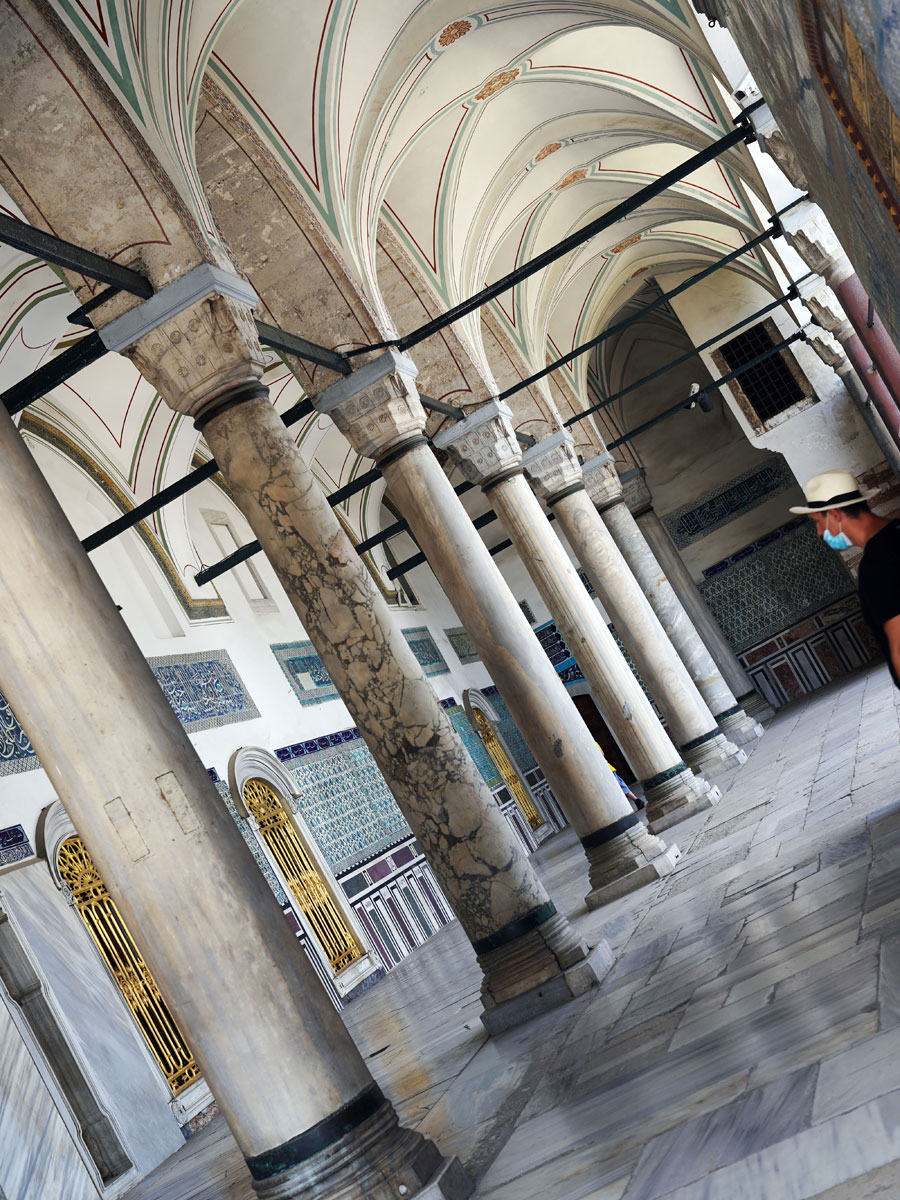
The Ottoman Empire is one of the empires of the world that has reached the largest borders and has maintained its dominance for centuries. Topkapi Palace, where sultans and their families live, is waiting to be seen in the Historic Peninsula with all its glory.
The construction of the Topkapı Palace, built on an area of 700,000 square meters on the eastern Roman Acropolis in Istanbul Sarayburnu, began in 1460 upon the order of Fatih after the conquest of Istanbul. The palace, which was completed in 1478, was used as the administration, education and art center of the Ottoman Empire for nearly 4 centuries.
The glorious structure, which has been entered through the Sultanate Gate in the direction of Hagia Sophia, consists of 4 intertwined houses. Nowadays, there are large gardens and squares around the palace covering an area of 300,000 square meters. Within the gardens surrounding the palace, many buildings were built in time, including the Tiled Pavilion, the Basketmakers' Pavilion and the Gospel Mansion. The museum's 300,000-piece collection includes porcelain, utensils, silverware, portraits of sultans, private items, and culturally unique artifacts from all over the world.
Grand Bazaar
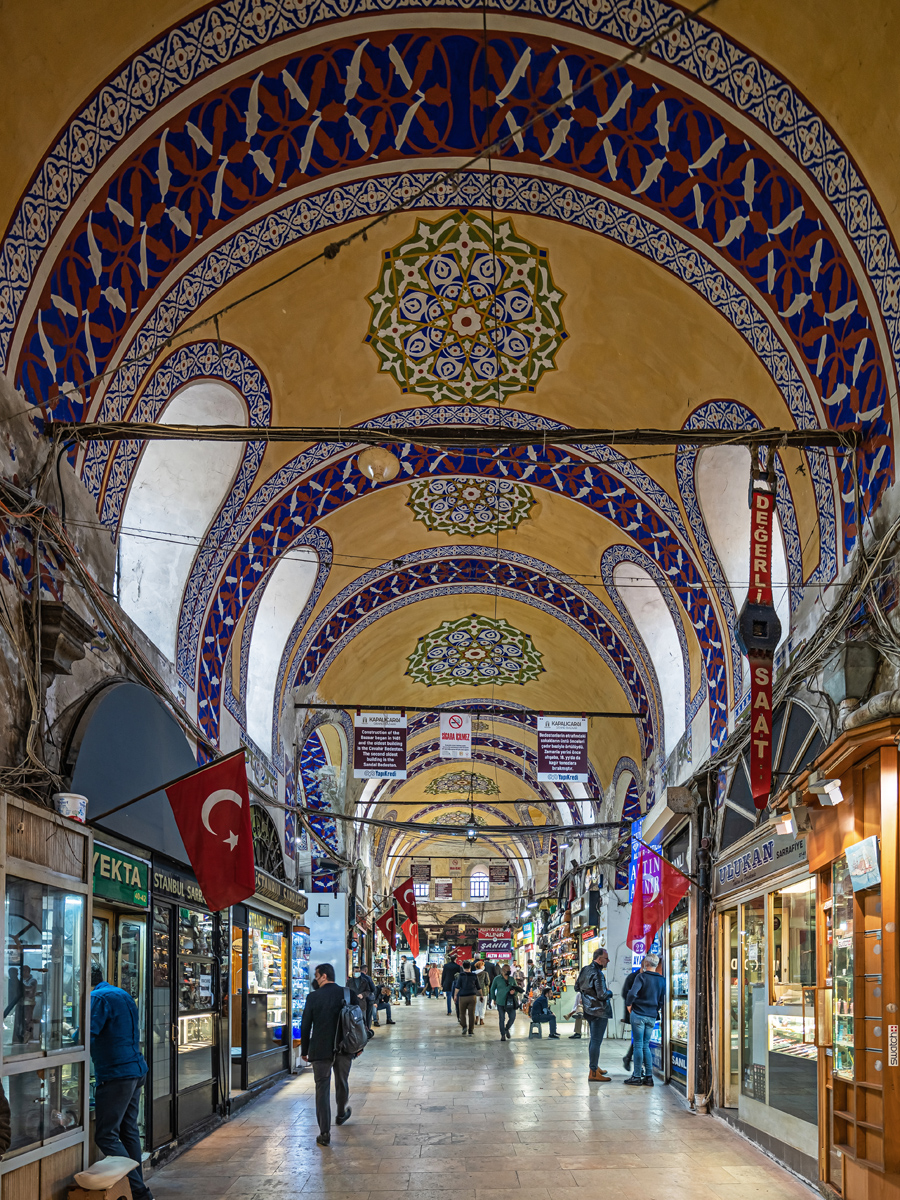
It is one of the oldest shopping center in the world.
One of the most popular stops of the Historic Peninsula is the Covered Bazaar which has been standing in Beyazit for 550 years. The Grand Bazaar, known s the Covered Bazaar by the turists, is famous for the streets where you will disappear and the goldsmiths which steer the world gold market.
In addition to shopping in the oldest bazaar in Istanbul, you will see that everything sold here reflects the ancient spirit of Istanbul.
Carpet, jewelry, works of famous Turkish businessmen silver, copper, bronze souvenirs and decorative items, pottery, onyx and leather, superior quality, form a rich collection of memories of Turkey. Western writers have given a wide space to the Grand Bazaar in their travel records and memoirs. The Grand Bazaar is one of the most important historical buildings decorating Istanbul.
Shopping in the Grand Bazaar, Istanbul
Jewelry, traditional Turkish motifs rugs, antiques, embroidered fabrics in Istanbul, gift cups, backgammon, chess sets, such as gift options to your loved ones can get the stylish design of this authentic space.
Recommendation: If you want to stay in the historical texture of Sultanahmet Square, we recommend that you choose Seven Hills Boutique Hotel . Located right in the heart of Sultanahmet Square, the hotel is only a walking distance to many historical sites such as Hagia Sophia, Blue Mosque, Basilica Cistern and Grand Bazaar. Hotel with a View of Hagia Sophia, Staying in a hotel with a view of the Blue Mosque will really make you feel very special.